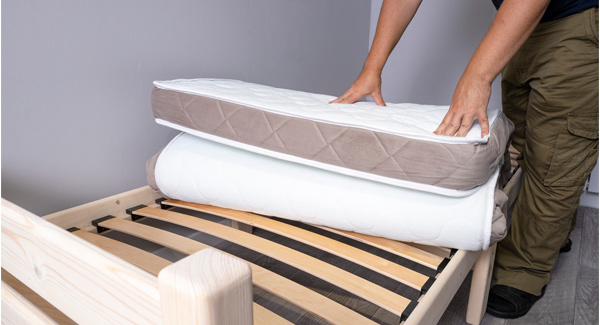
Zip and link allows you to zip two single beds together to create a king or super king size bed. It is a flexible option that gives sleeping partners the option to sleep together or apart.
A zip and link mattress usually comes with two zips located at the top and bottom of the mattress.

Ideal for sleeping partners with different comfort preferences
Zip and link beds are ideal for sleeping partners with different comfort preferences or vastly different sizes and body weights. As each bed is separate, sleeping partners can often choose their preferred mattress firmness without compromising comfort.
No movement or roll together
As each bed is independent, sleeping partners will not feel each other’s movement when getting in and out of bed or changing sleeping positions.
Zip and link beds are easier to manoeuvre
Zip and link mattresses are much easier to manoeuvre than one-piece mattresses. Most mattresses need regular turning to help even out the wear, which requires a lot of physical effort. Separate mattresses are much easier to turn and rotate than a one-piece mattress. Furthermore, individual beds are also much easier to move for cleaning.
As the mattresses can be separated, zip and link beds are ideal for homes with access restrictions, such as narrow staircases, low ceilings or tight corners, where a one-piece mattress would be out of the question.
Versatility
Zip and link is a versatile option that allows sleeping partners to sleep together on one large bed or apart in separate beds. They also work well in spare rooms. You can join them together, use them as twin beds, or even move them into separate bedrooms, depending on the sleeping arrangements.
What size is a zip and link bed?
Zip and link beds are typically available in the following sizes:
| Imperial size | Metric size | |
|---|---|---|
| King size | 2 x 2’6” x 6’6” | 2 x 75 cm x 200 cm |
| Super king size | 2 x 3’0” x 6’6” | 2 x 90 cm x 200 cm |
Some manufacturers will also make non-standard sizes available on request.
Generally, any bed made wider than 180 cm (6’0”) will need to come as a zip and link set. A one-piece mattress will be too heavy to manoeuvre and is unlikely to go up staircases or around bends.
Will standard bedsheets fit a zip and link bed?
When the beds are zipped together, standard bedding should fit. Keep in mind that when zip and link beds are unzipped and used as two single beds, they are longer (200 cm) than standard single beds (190 cm). This means that standard single fitted bedsheets will not fit.
Fortunately, plenty of companies provide extra length fitted sheets. Remember to double-check your dimensions carefully before ordering.
Can you attach a headboard to a zip and link bed?
If you intend to use a one-piece headboard with your zip and link bed, you will have to remove the headboard before you separate the beds. In this case, it may be best to buy separate headboards for each bed so that the headboards can remain attached when the beds are separated.
You’ll also need to consider the design of the headboards. A curved design may be more suitable when the beds are zipped together.
Are zip and link beds more expensive?
Zip and link beds are typically more expensive than standard beds because they do not go through the normal manufacturing process. Each zip and link bed is made longer than a standard single bed, and the zips will also need to be attached to the mattresses.
You should expect to pay at least £200 more for a zip and link bed compared to a one-piece bed of the same size.
Can you feel the zips in a zip and link mattress?
The zips typically sit lower than the sleeping surface with zip and link beds so that you won’t feel them during sleep.
It Is also unlikely that you will feel the seam when the two mattresses are joined together. However, some manufacturers, such as Vispring, conceal the seam with fabric. You can also use a one-piece mattress protector or topper if you feel the seam may be an issue.
Turning a zip and link mattress
Ensure the zips are unfastened before turning or rotating a zip and link mattress. As a general guide, you should turn your mattress once a week for the first three months of use then once a month after that. Refer to the manufacturer’s care instructions for specific turning advice.
Final thoughts
Zip and link beds are a luxurious and practical solution for many bedrooms. But, they are typically more expensive than standard beds, so you will need to allow this in your budget.