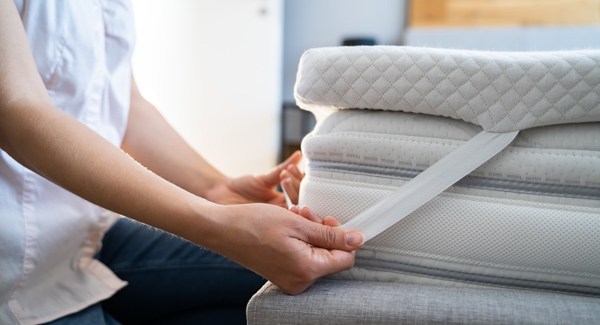
A mattress topper is an item of bedding that you place on top of your mattress to make it feel more comfortable.
In some cases, you might consider using a mattress topper without a mattress, for example, for camping, hiking, or as an alternative to sleeping directly on the floor. But is it a viable option? Here’s what you need to know.
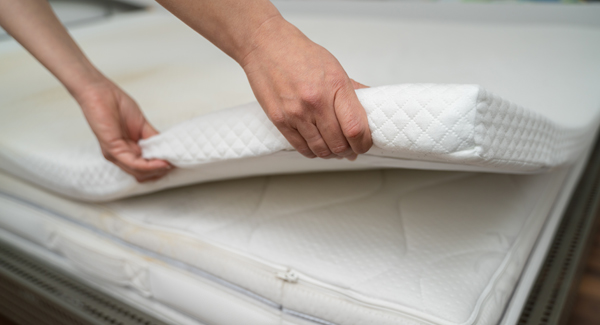
Why you shouldn’t use a mattress topper as a mattress
Using a mattress topper without a mattress should be temporary, limited to lighter individuals, like children, and only if the manufacturer allows it. However, relying on a topper as a mattress can cause several issues.
Lack of comfort
A topper by itself might lack sufficient padding or cushioning and may not conform well to body shape. As toppers are thin, they can feel quite firm, resulting in pain and discomfort at night.
Poor support
A topper alone might not support the body correctly or distribute your body weight evenly, resulting in misalignment. After prolonged use, it may contribute to painful pressure points, particularly around the shoulders and hips.
Another issue is bottoming out, where you can feel the surface underneath the mattress topper.
Poor quality sleep
Using only a topper can contribute to poor-quality sleep since it does not provide adequate comfort and support. This can leave you feeling tired and groggy when you wake up.
Compatibility with a bed base
As mattress toppers tend to be thin and flexible, they may not be suitable for slatted bed bases. If the slats are too far apart, the material might sag between the slats and get damaged. However, you could place a sheet of plywood on top of the slats to protect the mattress topper.
Excessive weight or force might also damage the bed base underneath since the topper only provides a thin layer of cushioning.
Using a topper without a mattress could invalidate its guarantee or warranty
A mattress topper is typically designed for use with a mattress. While some toppers can be used independently, placing them directly on the floor or a bed base could invalidate their guarantee or warranty.
Durability
Toppers are typically less durable than mattresses and will wear out much sooner when used independently.
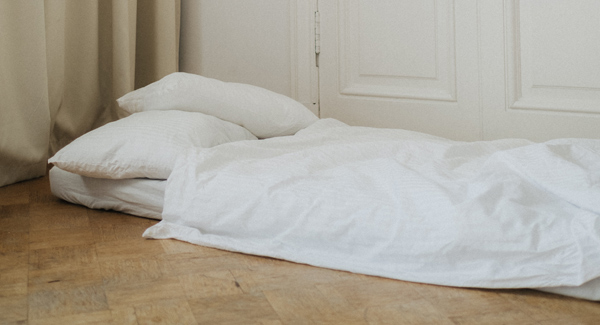
Can you place a mattress topper directly on the floor?
There are additional risks when placing a mattress topper directly on the floor.
Poor ventilation
Placing a mattress topper directly on the floor restricts the airflow underneath. Poor ventilation provides the ideal conditions for mould and mildew growth.
Exposure to pests
Sleeping on the floor exposes you to pests like spiders, bed bugs, and rodents.
Allergies
Placing a topper on the floor exposes you to dust and dirt, potentially triggering allergies.
What to consider when choosing a mattress topper
Mattress toppers perform well when paired with a suitable mattress. However, if you decide to use a topper without a mattress, here are some features to consider.
Mattress thickness
Mattress toppers are much thinner than regular mattresses, typically around one to four inches deep. In contrast, traditional mattresses are usually between ten and fourteen inches deep. Therefore, consider a thicker topper with generous padding and cushioning.
Materials
Mattress toppers are available in various materials, including memory foam, latex, polyester and wool. Each material has distinct qualities and will feel different to sleep on. Synthetic materials like polyester are inexpensive, whereas higher-quality materials like wool, latex, and memory foam offer greater pressure relief and longevity.
Sleeping position
Also, consider your preferred sleeping position when choosing a mattress topper. Side sleepers typically prefer softer toppers that cushion the shoulders and the hips, while back and stomach sleepers may prefer a firmer feel.
What are the alternatives to using a mattress topper?
There are several factors to consider when choosing a temporary bed, such as the space available, the frequency of use, and the level of comfort required. Here are some alternative options to explore.
Mattress
The type of mattress you rest on can significantly impact your sleep quality. Even if you don’t intend to use the mattress yourself, consider how a comfortable, supportive mattress will help your guests sleep better and feel better.
A good starting point is to consider who will use the bed. Children, for example, are often more adaptable and can usually sleep on anything. In contrast, adults may require a more supportive mattress.
Pocket springs and memory foam mattresses are popular options. Both distribute weight evenly and conform well to body shape. Memory foam, in particular, offers excellent pressure relief. The good news is that plenty of good pocket spring and memory foam mattresses are available without blowing your budget. Remember to research beforehand to ensure you’re making the right decision.
Air mattress
An air mattress is an inflatable bed made from materials like PVC, rubber, and plastic. Air mattresses are lightweight, versatile and easy to store, making them ideal for indoor or outdoor activities like camping, hiking or sleepovers. They come in various sizes and are easy to inflate.
Sofa beds
A sofa bed is a convenient option, providing a comfortable sofa for relaxing and an extra bed for guests. Sofa bed mattresses are relatively shallow since they are stored inside the sofa. However, they provide better cushioning than a topper and are typically more comfortable and supportive.
Futons
A futon is a versatile item that acts as a sofa and a bed. It has a folding frame that can be adjusted from a sofa position into a flat sleeping position, where the cushions are used as the mattress.
Futons come in various styles, materials, and sizes and are ideal for smaller spaces like guest rooms or study areas. However, the cushions can feel quite firm and are not particularly well padded.
Folding beds
A folding bed, also called a z-bed, is perfect for compact spaces since it can be folded away when not needed. These beds typically feature a metal frame on wheels and come with a shallow mattress, offering more comfort than a topper.
Sleeping pads
Sleeping pads or mats are ideal for outdoor activities like camping and hiking. They are lightweight, easy to carry and provide some cushioning and insulation from the ground.
Trundle beds
A trundle bed, consisting of a main bed with an additional bed stored underneath, is another clever space-saving option. You can usually raise the underbed to the same height as the main bed, allowing you to have two beds side by side or pushed together.
Trundle beds often come with thinner mattresses, allowing the underbed to store underneath the main bed easily. However, these mattresses offer a reasonable amount of padding and cushioning, as they don’t require bending or folding. You can usually upgrade the main mattress if you use it more regularly.
Final thoughts
Using a mattress topper as a mattress might seem like a cost-effective solution, but it may result in discomfort, insufficient support, and can cause aches, pains, and disrupted sleep. Opting for a proper mattress designed to provide adequate support and comfort is the best way to avoid these issues.